
An Interview with Dr. Rachel Criswell
Back in December of 2021, Maine was rocked by the discovery of “forever chemicals” on farmlands. The issue of contamination by per- and polyfluoroalkyl substances (PFAS), a large group of man-made chemicals used in consumer goods for their stain- and water-resistant qualities, had been bubbling to the surface since 2014, when a regional applied research effort, conducted by the Penobscot Nation and the Environmental Protection Agency (EPA), assessed the Penobscot River’s water quality and the risk to those who gather food from the river. Then in 2016, the detection of PFAS forced Fred Stone of Arundel to shut down his dairy farm. Awareness skyrocketed when the Maine Department of Environmental Protection (DEP) made an interactive map of sites that had been licensed for sludge spreading. Marketed to farmers as fertilizer, sludge is now known as a source of PFAS contamination. The state’s community of farmers felt the ground beneath their feet give way as the discovery of high PFAS levels in drinking and irrigation water led to soil, plant tissue, and blood testing — revealing extremely high levels of contamination in food grown on affected farmland.
The hardest hit farmers lost their land and livelihood, and were introduced to brutal uncertainties about their health. While the science about the effects of PFAS on human bodies is still developing, some of the associated health risks of exposure include thyroid dysfunction, high cholesterol, reduced vaccine response, reproductive issues during pregnancy, and increased risk of certain types of cancers.
While my farm in Freedom, Maine, had no history of spreading, and yielded clean water tests, my family’s time spent with loved ones at a highly contaminated organic farm in Unity meant that we are at risk of the illnesses that are associated with high PFAS exposure. Both of my kids ended up with high levels of PFAS in their blood, even though the youngest was never directly exposed to contaminated water or food. Devastatingly, his high PFAS levels were a result of transplacental and human milk transmission. As a result, my levels fall in a less dangerous range.
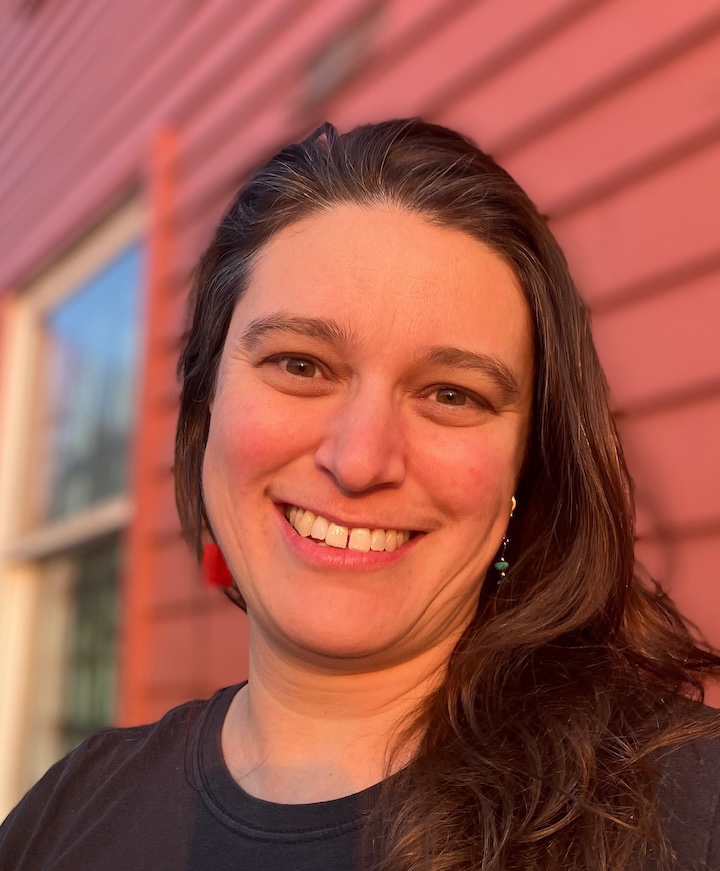
Dr. Rachel Criswell of Redington-Fariview General Hospital in Skowhegan is on the cutting edge of reducing PFAS levels in humans. Dr. Criswell is a physician-scientist who practices family medicine and maintains a research practice that stems from her master’s work in environmental toxicology. What follows is an inspiring conservation I had with Dr. Criswell about her work, both in clinic and research, which is patient-driven and modeled after her vision for a collaborative relationship with her community. It has been edited for length and clarity.
– Meg Mitchell
Mitchell: What do you see, from either a mental health or a physical health perspective, as the direct impacts of PFAS exposure in the populations that you serve?
Criswell: Something I tell all my patients is that PFAS is a risk factor, and PFAS poisoning is very rare. I definitely see PFAS-associated illnesses in my patients, but it’s hard to know if it comes from PFAS or if it comes from something else or a combination. High cholesterol, thyroid disease, and breast cancer have all been linked to PFAS and are common illnesses. All of these have lots of different causes, but certainly I have patients who both have high PFAS exposure and those things.
I think a lot of people are feeling really stressed about the changes in their job situation, their financial situation, and their housing due to PFAS exposure. They are worried about their health and their children’s health. A lot of people are frustrated by so many unknowns around PFAS. I would love it if the medical community could get on board with this as something that’s a big problem, but it’s not impossible to get your mind around. A lot of times we think about environmental health or chemical exposures and think, “Well, something’s gonna kill me or there’s nothing we can do about it.” But there are ways that we can do some harm reduction in our communities.
Mitchell: Can you walk through the treatment that you’re prescribing for PFAS-affected patients in your care and how you decided to pursue that option?
Criswell: Sure. It wasn’t until 2022 that the National Academies’ work came out and all of a sudden there were clinical guidelines for caring for folks who’ve been affected by PFAS. It was really exciting that not only were you just saying to patients, “Yeah, this sucks, you may be at risk for certain things,” but all of a sudden there are concrete guidelines to walk people through it. The next step is always, “Well, what do I do about it?”
For a long time, there were two studies. One was a randomized control trial from Australia that looked at firefighters who had high levels of PAS in their body and looked at serial blood draws as a way to remove PFAS. They found something like a 10 to 25% reduction in blood levels over the course of a year after giving blood every month.
There was another study from Alan Ducatman who ran the C8 Health Project, which is a study of the DuPont workers in West Virginia and the Ohio River Valley who had high levels of PFAS in their body. It was an observational study, so he looked at thousands of participants and he found that people who were incidentally taking the cholesterol medicine, cholestyramine, had lower levels of PFOS [perfluorooctane sulfonate] in their body than people who are not, like noticeably lower levels. So, the idea was that maybe this medicine is doing something.
Some of the research community is pretty hesitant about treatment because we don’t know what long-term side effects might be or if there might be a rebound, which means that maybe, if PFAS is being stored in the liver or fat, and if it is taken out of the blood, there might be a rush [of PFAS] from these other organs into the blood. We haven’t studied that.
Finally, last year, a randomized control trial came out of Denmark. One of my patients emailed it to me, and it was incredible in terms of the effect that they were seeing. This was close to 60% reduction in body burden levels of PFOS in particular, although all PFAS were reduced.
We were sort of hemming and hawing like, “How do we do this?” I started running it by my clinical colleagues. They said, “Oh, that’s great. There’s a treatment. This is an old medication. We use medications off-label all the time (meaning not for what they’re approved for by the FDA), and you should just use it like that.”
I worked with my colleague Dr. Abby Fleisch in Portland and the MaineHealth medical ethicist, and a pediatric gastroenterologist, who uses this medicine all the time in sick kids. We wrote a protocol based on the randomized control trial, with very extensive pre- and post-testing, to make sure we don’t have any side effects. It was approved by our pharmacy and therapeutics committee. I was amazed that everyone was on board. Then I started prescribing it clinically, not for research.
We do hope to write a case series documenting it so we can share the information. Anecdotally it has very effectively reduced PFAS body burden in people. We don’t know what the long-term health effects are, if there are any side effects, but I’m cautiously optimistic about it.
Mitchell: How do you decide if someone is a good fit for taking the cholestyramine?
Criswell: 90% or more of the population has levels between 2 and 20 nanograms per milliliter, and that’s what we consider background exposure. But, in our community, we have people with very high exposure: like hundreds and thousands of nanograms per milliliter in their blood. We really wanted to focus the treatment on those folks. So, we made a cutoff at the 99.5 percentile for the sum of seven PFAS, which is 53 nanograms per milliliter.
This is a new application of this medicine. So that’s where we’re starting, and we’ll see what happens.
Mitchell: My children are patients of yours and you’ve been clear that you don’t know how this will affect the long-term risks of associated illnesses, and I’m curious, as the science is still so young, what is your hypothesis that this treatment will have?
Criswell: I think there are three important things to consider. The first is that we think that PFAS might be more of a risk factor during certain developmental times, like conception to age two, and puberty, because those are times when there’s a lot of hormone signaling and a lot of changes in the body.
Hypothetically getting PFAS out of the body before those important developmental times could be really important. That’s still an area under study, but there’s a lot of big cohort data that’s being analyzed now to look at whether those specific points in time are really important in PFAS risk.
Another thing that I think is really important, that is, regardless of long-term effects: If someone’s hoping to get pregnant or lactate, reducing PFAS in their body before doing that can prevent transmission to a fetus or lactational transfer, which I think is just amazing for people who want to be pregnant or lactate.
I think that alone is a reason for cholestyramine to be used. Then there’s some early data out of University of Southern California that shows that in liver cells, if you have liver cells with PFAS, they up-regulate a cancer gene, and then if you take away the PFAS, they down-regulate it.
So, there’s some very early data showing that maybe removal of PFAS reduces long-term health risks. That’s in Petri dishes, so I don’t think the data is anywhere close to saying what that means in humans. But that all leads me to think that it’s probably better to get the PFAS out of your body than not.
Mitchell: Knowing that Maine is not the only epicenter, but one region of the country that has high environmental toxin loads in water and soil, do you recommend the average Mainer with no known exposure, or with minimal exposure, get a PFAS blood test?
Criswell: We’re all exposed to PFAS all the time, just from being alive in the modern world. I screen everybody during their physical for the potential for high PFAS exposure. I do that based on the National Academies guidelines — that is a government body that summarized all the epidemiologic data. The guidance says that people who are firefighters, people in the military, people who work in factories with PFAS, people with known high water levels, or people who live on or near or may have worked on one of those places should all get tested.
I don’t think every Mainer needs to be tested, but I do think that it would be great if primary care doctors or patients themselves could go through that criteria and really think “Oh, am I at risk of high exposure?” Because there’s very simple straightforward monitoring we can do to catch those health outcomes before they happen.
And now there may be a promising way to get that stuff out of your body.
Mitchell: What do you wish the public knew about your work?
Criswell: One of the things that is really important for the general public and the medical public to know about PFAS care is that even if PFAS exposure and contamination is hard to understand, the care of people affected by PFAS is very well within the realm of primary care.
There are very clear guidelines for when we should do further screening, and the things that we screen for are things that we screen for all the time. You check a cholesterol panel every year, you check a thyroid panel, and every year you do a testicular exam. Maybe the one thing that’s a little out of the ordinary is that you do a urine test to look for microscopic blood that could indicate kidney cancer.
The Maine CDC, through the PFAS Fund, is doing some really great physician education. My hope is that it will empower primary care doctors to screen their patients, or when patients come to them saying “I’ve been exposed,” act on it. Right now, very few physicians are prescribing cholestyramine, but we have a project now to review all the patients that we’ve seen so far and vet the protocol with other experts. My hope is that that’s something we could share eventually so that other doctors or healthcare providers can prescribe it.
Mitchell: You have this research component to your work and you’re still an acting family doctor. Do you feel like maintaining that family practice alongside the research is important to you?
Criswell: Yes, I really do. I really love research. I like the way it makes my brain work. Also, I just really like seeing my patients and chatting, and it also grounds the research in something real. So many of my research questions and so much of the joy I get from research is applying it in the clinic with patients.
I really love primary care and family practice, and I’m excited to keep doing it.
Mitchell: It’s so inspiring that you can have such a strong local impact and then your research work can ripple out into far and wide communities.
Criswell: I feel really lucky to be where I am.
Mitchell: What would a world look like in which our communities were thriving and healthy? And not even how do we get there, but what’s your vision for that?
Criswell: One of the things I love about living in rural Maine is that the sense of community is so strong, and I would love to see us use that sense of community to lift each other up a little bit. Financially, emotionally, socially. I think that would be just such a beautiful way to support each other.
In terms of healthcare, I would love for us to move towards a more holistic view of health, so not just seeing people when they have a cold or if they need an MRI, but rather having the opportunity to talk through the whole picture with someone. Less of like a customer service model and more of like a joint partnership.
This article was originally published in the winter 2025-2026 issue of The Maine Organic Farmer & Gardener.